C-Quip / Marine

    01

    Tender Fenders

    The impact stops at the waterline.

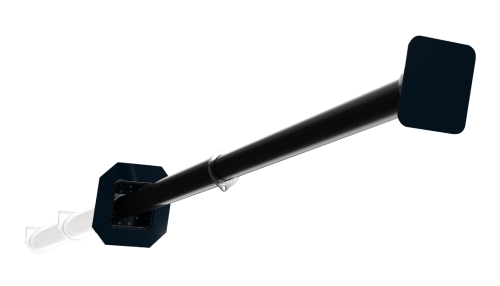
    Carbon fibre tender fenders with an inflatable Hypalon tube that absorbs impact before it reaches the yacht. Engineered by finite element analysis, customised to the transom profile, and purpose-specified for the intended tender weight.

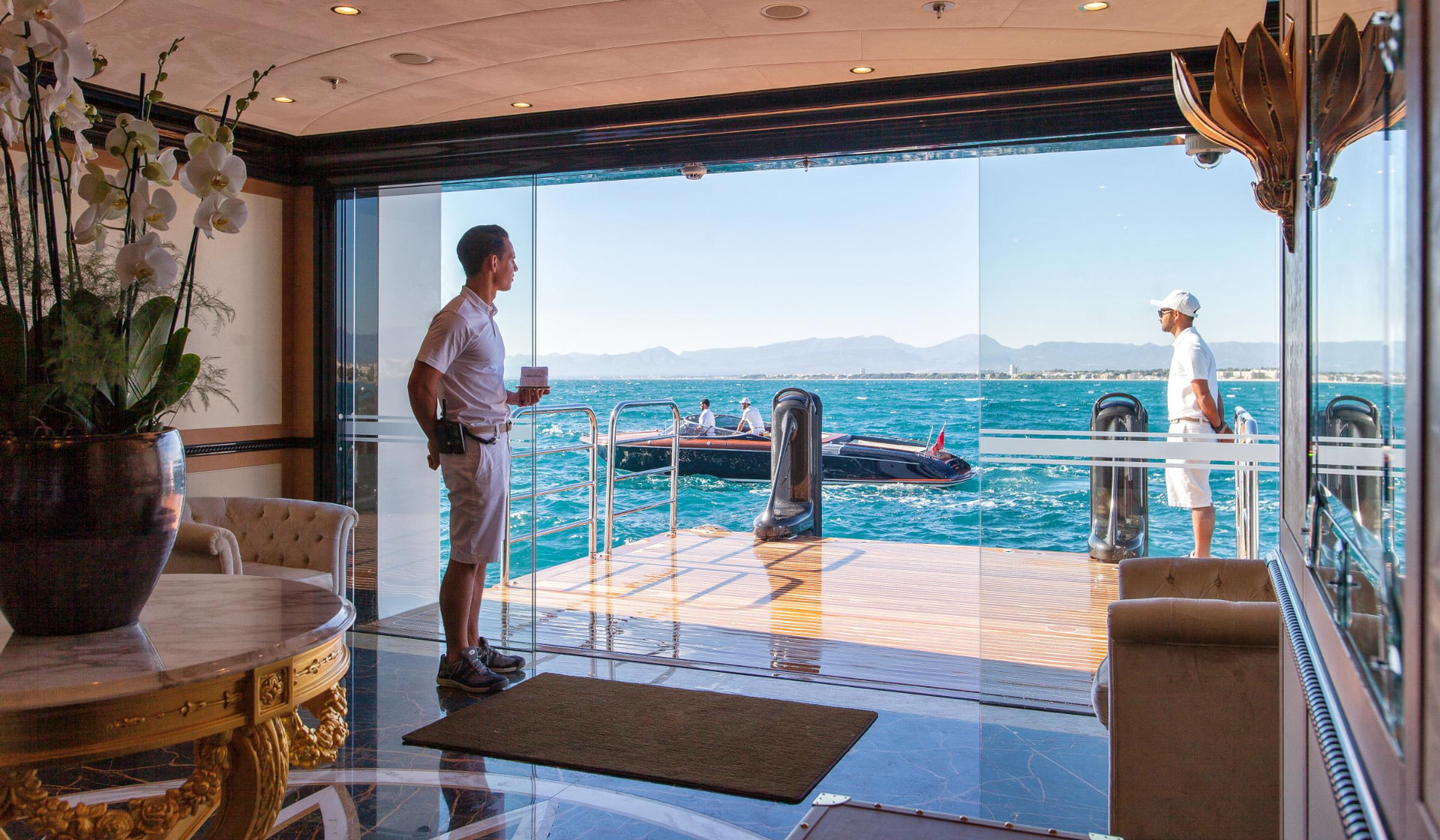
    C-Quip tender fenders in position on a superyacht transom with the tender alongside, viewed from inside the yacht

    Composite marine equipment / engineered to order

    Overview

    Overview

    What a tender does to a yacht, absorbed.

    A tender coming alongside is the most routine damage risk a yacht faces. It happens several times a day, in whatever conditions the anchorage offers, often with a guest already standing on the platform.

    C-Quip tender fenders take that impact at the waterline and keep it there. An inflatable Hypalon tube deforms on contact and absorbs the energy, and a carbon fibre strut distributes what remains into the yacht's structure rather than concentrating it at the transom. The result is less noise and movement felt on board.

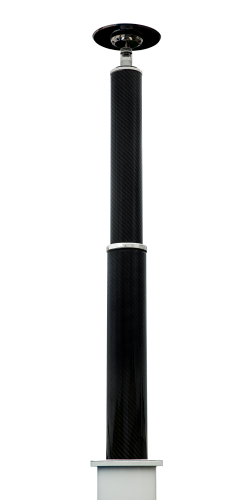
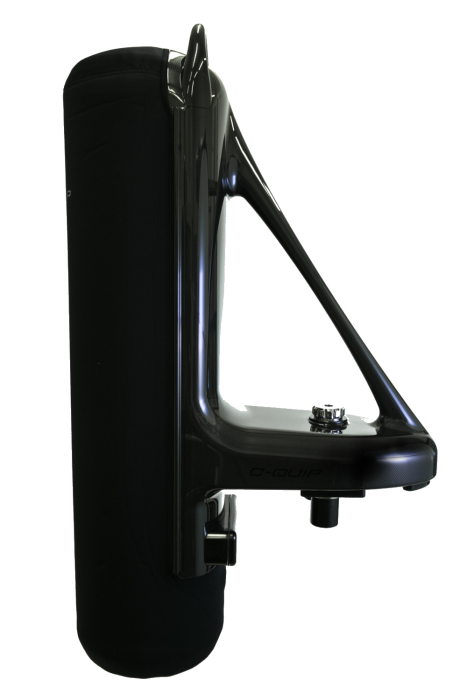
    The body is pre-preg carbon fibre monocoque, developed through extensive computer simulation to maximise rigidity for the least weight. A Standard fender weighs approximately 25 kg and a Slimline approximately 13 kg, so crew can deploy or stow one without help. When not in use, each fender locks onto a carbon fibre storage bracket.

    Fenders are customised to the transom profile. Vessel type and tender weight determine the size and the number required.

    C-Quip Standard tender fender with inflatable Hypalon tube and carbon fibre strut
    Purpose-specified braced format
    Up to 25 tonnes

    Purpose-specified braced format

    Approximate weight, Standard / Slimline
    ≈25 / ≈13 kg

    Approximate weight, Standard / Slimline

    Standard, Slimline and Unbraced
    3 formats

    Standard, Slimline and Unbraced

    Contact options
    Hypalon or foam

    Contact options

    • •Inflatable Hypalon tube absorbs impact before it reaches the yacht
    • •Carbon fibre strut distributes impact load into the vessel structure
    • •Lightweight pre-preg carbon fibre monocoque body
    • •Standard, Slimline and Unbraced formats
    • •Inflatable Hypalon tube or solid foam contact options
    • •High grade UV-resistant neoprene cover
    • •Integrated hand holds for boarding
    • •Titanium and 316 stainless steel fittings
    • •Electrically isolated deck socket
    • •Quick deployment, with a carbon fibre storage bracket
    • •Customised to the transom profile, with boat name embossing available

    Finite element analysis

    See how impact load is distributed.

    FEA stress simulation, impact compression, top view

    FEA stress simulation, impact compression, front view

    The visualisation shows the response of the structure under the modelled load case. It is an engineering visualisation, not a live calculation. Top and front views; colour indicates relative stress distribution through the fender body under tender contact.

    Relative stress, normalised

    LowHigh
    1. 01

      Impact absorption

      Hypalon tubes absorb tender impact before it reaches the carbon fibre body.

    2. 02

      Load path

      The carbon fibre strut distributes the remaining load into the yacht's structure.

    What the analysis shows

    The visualisation shows the response of the structure under the modelled load case. It is an engineering visualisation, not a live calculation. The Hypalon tube deforms first at the point of contact, and the carbon fibre strut then distributes the remaining load into the yacht's structure rather than concentrating it at a single point on the transom.

    Why it works

    Features

    An inflatable contact surface, a carbon fibre structure behind it and a machined, electrically isolated deck fitting beneath, each part doing one job in sequence.

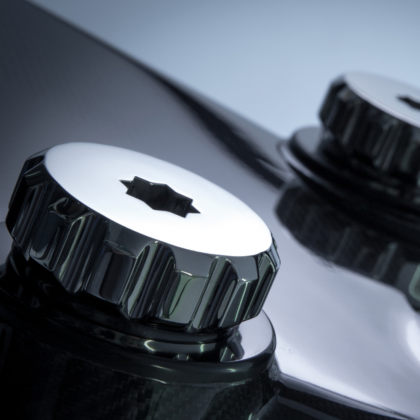
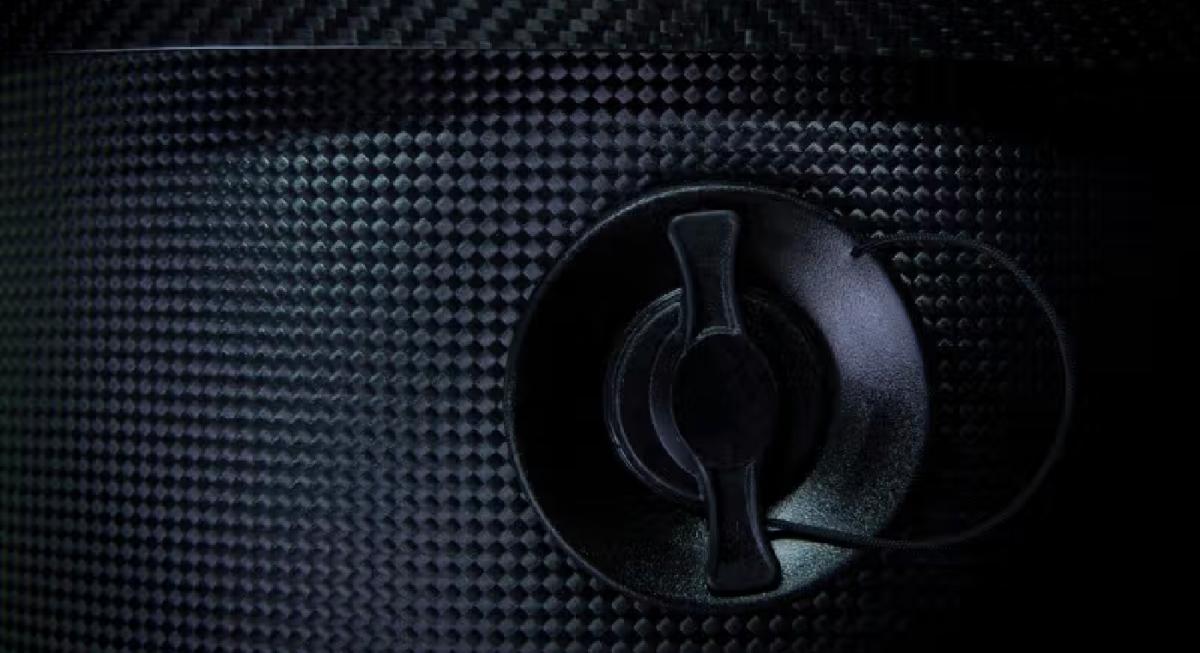
    Detail of the inflation valve set into the neoprene cover of a C-Quip tender fender

    01

    Three parts, one job.

    The fender works as a sequence rather than as a single cushion. The Hypalon tube takes the contact and deforms, absorbing energy and spreading the impact over a longer period. The high-grade UV-resistant neoprene cover protects the tube and keeps the contact surface from marking the tender. Behind both, the carbon fibre monocoque body and strut carry what remains of the load into the vessel structure, distributed rather than concentrated. Where an owner would rather not manage tube pressure, a solid foam contact option is available in place of the inflatable tube.
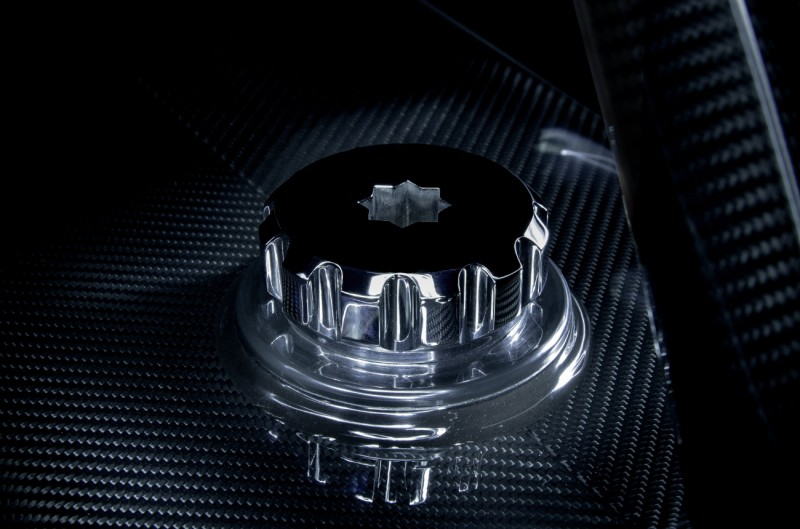
    Polished stainless steel deck socket fitting set into a carbon fibre tender fender base

    02

    The fitting in your deck, in detail.

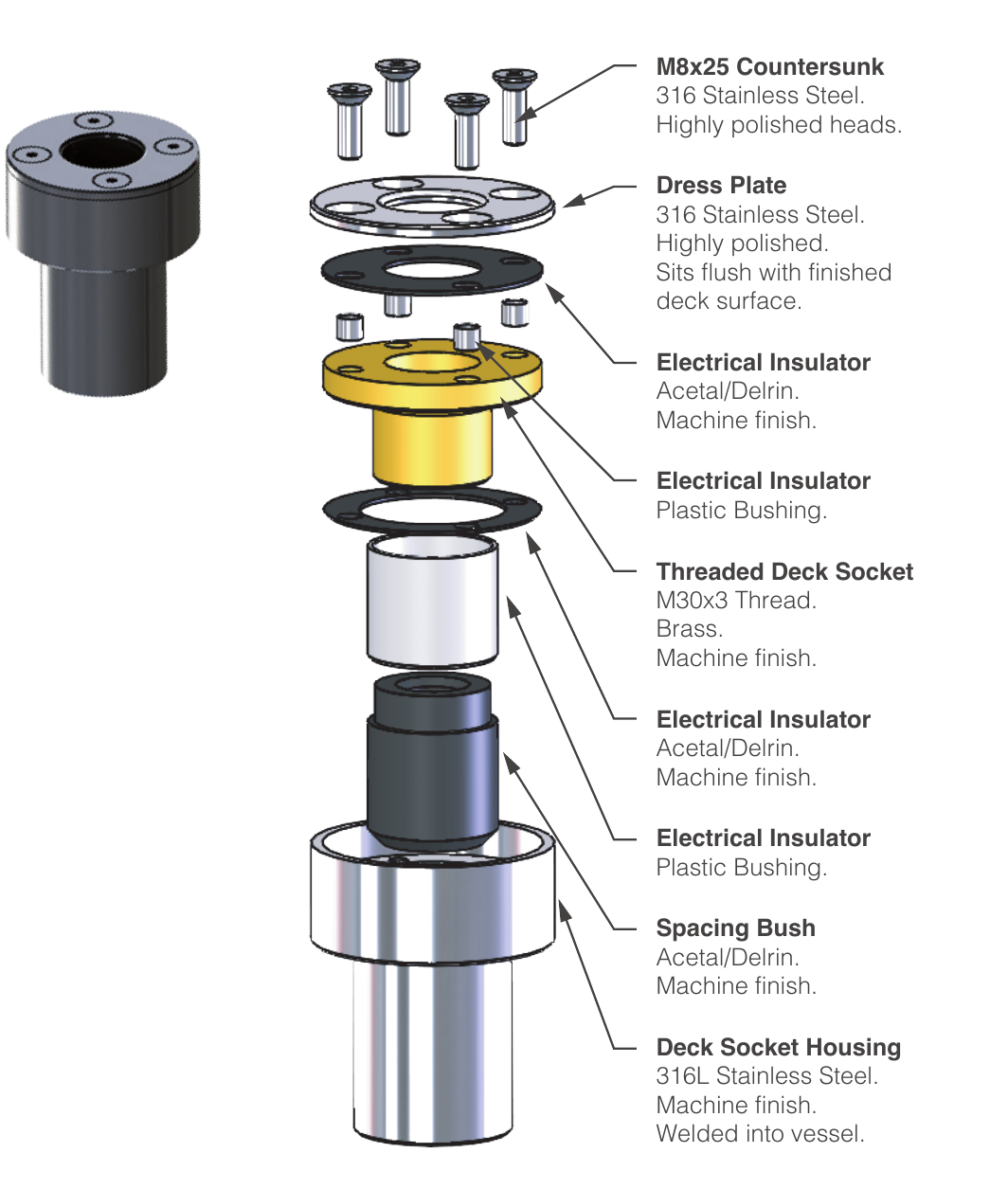
    A tender fender puts repeated, substantial load into a single point on the deck, and that point has to carry it without becoming a maintenance problem. The C-Quip deck socket is a machined assembly rather than a bolt. A 316L stainless steel housing is welded into the vessel and a brass threaded socket takes the fender. Between them sit a series of Acetal/Delrin and plastic bushings that electrically isolate the fitting from the vessel structure. Above deck, a highly polished 316 stainless dress plate sits flush with the finished deck surface, so the socket disappears when the fender is stowed.

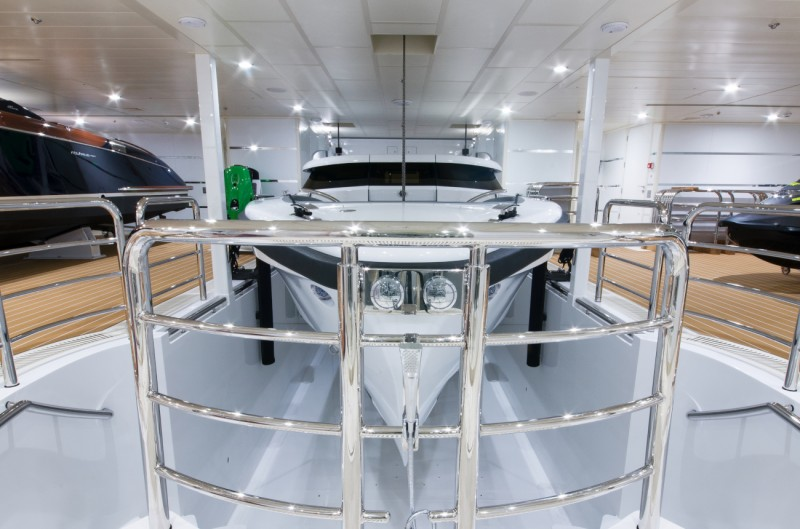
    Tender fenders in position on the transom of a superyacht with the tender garage open

    03

    Stowed out of sight.

    Each fender drops into its threaded deck socket and locks onto a carbon fibre storage bracket when it is not in use, with the inflatable tube deflated for compact stowage. Integrated hand holds double as a grab point when boarding from the tender.

    Deck socket

    Machined, not bolted.

    Housing
    316L stainless steel, welded into the vessel
    Threaded socket
    Brass, M30×3 thread
    Isolation
    Acetal/Delrin and plastic bushings between socket and housing
    Dress plate
    316 stainless steel, flush with the finished deck
    Fixings
    M8×25 countersunk, 316 stainless steel
    Exploded diagram of the C-Quip deck socket showing countersunk fixings, dress plate, electrical insulators, brass threaded socket, spacing bush and 316L stainless housing
    Exploded deck socket assembly. The insulating components isolate the brass socket from the stainless housing welded into the vessel.

    Models

    Two standard configurations, plus a bespoke option.

    C-Quip tender fenders are available in Standard and Slimline configurations, plus a bespoke Unbraced option. The tender's weight and the transom profile determine which is appropriate and how many are required.

    Comparison of the Standard, Slimline and Unbraced tender fender formats
    MeasurementStandardSlimlineUnbraced
    Maximum tender weightSpecified per project, up to 25 tonnesUnder 3 tonnesConfirmed per project
    Approximate weight≈25 kg≈13 kgProject-specific
    Width370 mm170 mmProject-specific
    Maximum length2,300 mm2,130 mmProject-specific
    Hull braceYesYesNo

    The Unbraced format has no hull brace, so its deck socket can sit further inboard. This can suit vessels with pre-existing sockets or transom arrangements where a brace cannot be landed. Its dimensions and maximum tender weight are confirmed by C-Quip engineering for each project. A braced fender must also be specified for its intended tender weight. The 25-tonne version requires a twin-pin system and additional material in the fender body.

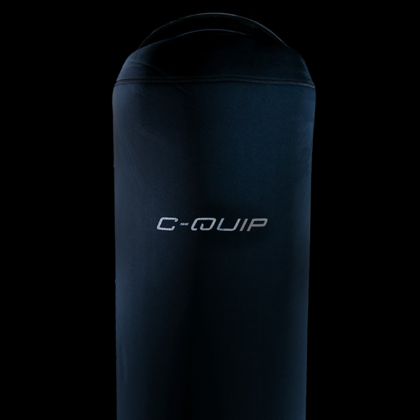
    High grade UV-resistant neoprene fender cover with the C-Quip name embossed

    Contact options and cover

    Inflatable Hypalon tube or solid foam. The inflatable option absorbs more energy and deflates for compact storage; the foam option removes the need for pressure management. Both sit behind a high grade UV-resistant neoprene cover, with boat name embossing available.

    Highly polished stainless steel deck pins for a C-Quip tender fender

    Fittings and options

    Titanium and 316 stainless steel fittings, highly polished. Options include paint finish to the vessel's colour scheme, boat name embossing, dual deck pins, a carry bag and a carbon fibre storage bracket.

    Choosing

    How many, and which format.

    Two things determine the specification: the weight of the tender and the profile of the transom. Braced fenders are specified for the intended tender weight, and a 25-tonne application requires a twin-pin system and additional material in the fender body. The Slimline is for tenders under 3 tonnes. The Unbraced format allows the socket to sit further inboard and is rated project by project.

    The number of fenders required depends on tender weight and the length of the contact area. C-Quip determines this project by project.

    Send us the tender weight and the transom arrangement and we will confirm the format and the number required.

    Questions

    Frequently asked.

    Each fender is specified for the intended tender weight. A braced fender can be purpose-specified for a tender up to 25 tonnes, but that capacity does not apply to every braced fender. The 25-tonne version requires a twin-pin system and additional material in the fender body. The Slimline fender is specified for tenders under 3 tonnes. The Unbraced rating is confirmed for each project.

    Technical information

    Specifications at a glance.

    Compare construction, dimensions and capacities below. Fenders are customised to the transom profile, so the figures shown are maximums and standard values rather than fixed dimensions.

    Construction

    Body
    Pre-preg carbon fibre monocoque construction
    Fittings
    Titanium and 316 stainless steel, highly polished
    Contact area
    Inflatable Hypalon bladder or solid foam
    Cover
    High grade UV-resistant neoprene
    Deck socket housing
    316L stainless steel, welded into vessel
    Threaded deck socket
    Brass, M30×3 thread
    Dress plate
    316 stainless steel, flush with finished deck
    Isolation
    Acetal/Delrin and plastic bushings between socket and housing
    Fixings
    M8×25 countersunk, 316 stainless steel
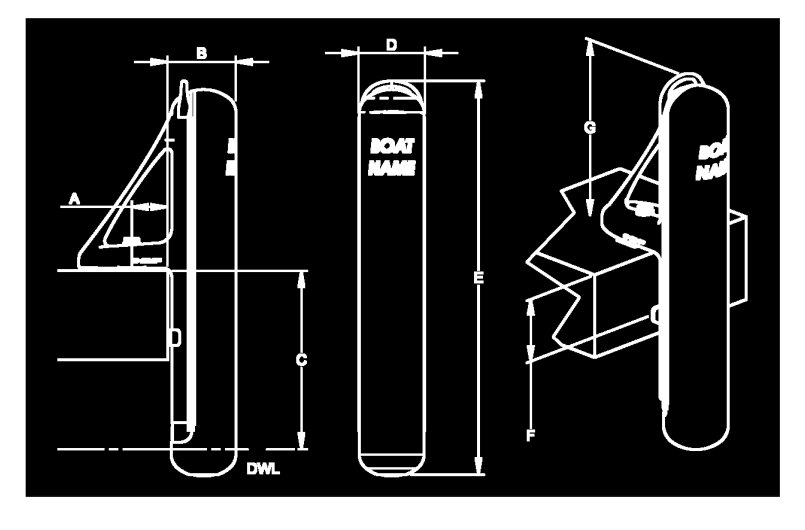
    Three-view key measurements drawing of a C-Quip tender fender with dimensions A to G labelled
    Dimension references A to G correspond with the table below.

    Dimensions

    Hull brace to centre of deck socket (mm) · A
    Max 170
    Tube depth to platform edge (mm) · B
    189
    Height of platform above waterline (mm) · C
    Max 950
    Width (mm) · D
    170
    Length (mm) · E
    Max 2,130
    Height from platform to hull brace (mm) · F
    150 to 800
    Height above deck (mm) · G
    997
    Approximate weight (kg)
    ≈13
    Maximum tender weight (tonnes)
    < 3

    Height of platform above waterline is the standard value. Fenders are customised to the transom profile, so dimensions shown are maximums and standard values. Braced fenders are specified for the intended tender weight. A 25-tonne version requires a twin-pin system and additional material in the fender body. The Slimline is rated for tenders under 3 tonnes. Unbraced dimensions and maximum tender weight are confirmed for each project.

    Need the specification offline?

    Download the C-Quip Tender Fenders fact sheet for technical reference or to share with your project team.

    Download fact sheet

    Specify tender fenders for your vessel.

    Tell us about the vessel, the tender weight and the transom profile. The C-Quip team will help determine the format, size and number of fenders required, and the deck socket arrangement.